Slow Living With Kids: A Cottagecore Approach to Food, Screens, and Family Rhythm

Cottagecore started as an aesthetic of gingham, sourdough, and wildflowers, but for a lot of families it’s turned into something more practical. Underneath the linen aprons is a simple idea: fewer things, slower days, and more time spent doing ordinary tasks together. That idea gets tested fast once kids are involved, because children come with snacks, schedules, school group chats, and eventually a request for their own phone. The good news is that slow living translates well to family life when you treat it as a set of daily rhythms instead of a look.
The two places those rhythms matter most are the table and the screen. What a family eats, and how it eats, shapes energy and mood for the whole day. How a family introduces technology shapes attention, sleep, and the quality of the time everyone spends together. Here’s how to bring a cottagecore approach to both without turning your home into a museum or making your kids the only ones at school with no way to call home.
What Slow Living Looks Like in a House With Kids
Slow living with children doesn’t require a farmhouse, a flock of chickens, or a homeschool schedule. It means choosing a few anchors that repeat every day and protecting them from the noise. A shared breakfast, a screen-free dinner, a walk after school, and a predictable bedtime routine are all small, but together they give kids a real sense of steadiness. Families who try to adopt every cottagecore habit at once usually burn out within a month, so it’s smarter to pick two or three rhythms and let the rest follow.
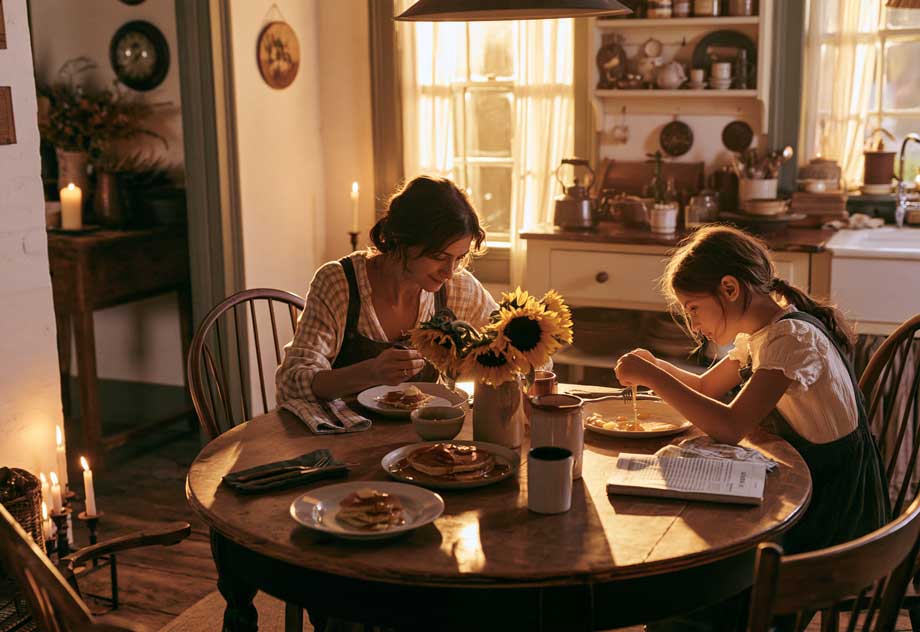
The anchors you choose also send a message about what your family values. When a meal is cooked together and eaten without devices, kids learn that time with each other is worth guarding. When a phone arrives with clear rules and a clear purpose, they learn that technology is a tool the family uses on purpose. Food and screens might seem like separate topics, but they’re the two daily habits most likely to either support your rhythm or quietly take it over.
Building a Slower Plate
Cottagecore cooking leans on whole ingredients, simple preparation, and dishes you can make again and again without a recipe card. That approach happens to line up with eating for steady energy, since meals built around fiber, protein, and unsaturated fats keep everyone fuller and less prone to the mid-afternoon crash. For parents who are also trying to manage their own weight, the slow approach is a relief, because it swaps restriction for meals that actually satisfy. Fewer processed snacks in the pantry also means fewer negotiations at 4 p.m.
Avocados are a good example of a slow-kitchen staple that earns its place. Nutrition data on how avocados support weight loss shows that a 50-gram serving, about a third of a medium avocado, delivers roughly 80 calories, 3 grams of fiber, and 6 grams of mostly monounsaturated fat. That pairing of fiber and healthy fat slows digestion and promotes fullness, which helps adults stay satisfied between meals and makes avocado a sensible part of a weight-loss plan when portions stay reasonable. It also mashes onto toast, blends into smoothies, and tops a bowl of beans and rice, so it’s easy to work into meals the kids already eat.
A slow plate doesn’t need to be elaborate to feel intentional. A weeknight dinner of roasted vegetables, a pot of lentils, warm bread, and sliced avocado takes about 40 minutes and almost no planning. Weekend meals can move outdoors, too, and once you’ve gathered the essentials for a cottagecore picnic, turning lunch into an event takes almost no extra work. Kids remember these meals because they’re tied to a place and a feeling, and that’s the whole reason to eat slowly in the first place.
A Kitchen Kids Can Grow Into
Getting children involved in cooking is one of the most reliable ways to slow a household down. Toddlers can wash produce, preschoolers can tear lettuce and mash avocado with a fork, and school-age kids can measure, stir, and set the table. Each step takes longer than doing it yourself, and that’s exactly why it works, since the task turns into shared time. Kids who help cook are also more willing to try whatever ends up on the plate.
For the littlest cooks, pretend play builds the same habits before they’re ready for a real stove. Many slow-living parents look for non-toxic wooden play kitchens for toddlers, since the best ones are built from FSC-certified wood, finished with water-based paints, and sturdy enough to pass down. A play kitchen placed near the real one lets a toddler “cook” alongside you while dinner happens, which keeps them close without handing them a tablet. It’s a small design choice that keeps screens off the counter during the busiest hour of the day.
The Screen Question Every Slow-Living Family Hits
Sooner or later, the calm kitchen meets the group chat. Kids feel the pressure early, and the numbers back them up: Common Sense Media’s 2019 tween census found that 53% of kids own a smartphone by age 11 and 69% own one by age 12. The same research showed the share of 8-year-olds with their own phone rising from 11% in 2015 to 19% in 2019. For a family built around slower rhythms, those figures can feel like a countdown.
Pretending the pressure doesn’t exist rarely works, and banning devices outright often just moves the conflict to a friend’s house. A slower approach treats technology the way cottagecore treats everything else: deliberately, in small doses, and with a clear reason behind each choice. That means deciding what a device is for before deciding which device to buy. A child who needs to text a parent after soccer practice has very different needs from one who wants to join every app their classmates use.
Choosing a First Phone Without Losing the Rhythm
Readiness has more to do with maturity than with a birthday. Parents can look at whether a child follows household rules without constant reminders, handles consequences without falling apart, and takes care of their belongings. If those habits aren’t in place yet, a phone won’t create them, and it’ll probably magnify whatever’s already happening. Asking why the child needs a phone right now, and writing that reason down, keeps the decision grounded in the family’s real needs.
For most first-time owners, the device itself matters as much as the timing. A standard smartphone ships with a browser, open app stores, and social media, and its parental controls need ongoing setup and maintenance that tech-savvy kids often learn to work around. Choosing a simpler first phone for kids means picking a device designed without a browser or social media, so the protections are built in and there’s nothing to accidentally leave unlocked. That kind of phone covers calls, texts, and check-ins, which is usually all a 10- or 11-year-old actually needs. Kids can then earn more features over time as they show they can handle them.
The slow-living mindset fits this decision naturally. Cottagecore families already prefer tools that do one job well, from a cast-iron skillet to a wooden spoon, and a simple first phone follows the same logic. It handles communication and leaves out the endless scroll, which keeps dinner, homework, and bedtime protected. When the time comes for a full smartphone, the child arrives with years of practice using technology on purpose.
Writing Down the House Rules
Rules work best when they exist before the phone is unboxed. The AAP’s family media plan recommends screen-free zones such as the dinner table, homework time, and the time before bed, and it urges parents to create a plan for every member of the family, themselves included. That last point matters in a slow-living home, because kids copy what they see far more than what they’re told. If a parent scrolls through dinner, no written rule will hold for long.
Some families keep their rules in a short written agreement taped inside a kitchen cabinet, while others prefer a quick check-in at Sunday dinner. Either way, the core rules tend to look similar: phones charge overnight outside the bedroom, meals stay device-free, and kids know they can bring anything uncomfortable they see to a parent without getting in trouble. The AAP also suggests revisiting the plan at the start of each school year and during holiday breaks, which lines up neatly with the seasonal rhythm cottagecore families already follow. A fall reset, when the pumpkins come out and routines tighten up again, is a natural time to look at what’s working and what isn’t.
Letting the Rhythm Do the Work
Slow living with kids comes down to a handful of choices made early and kept consistently. A pantry built around whole foods makes healthy meals the default, a kitchen designed for small helpers keeps kids involved, and a thoughtful first phone keeps technology in its place. None of these choices require a perfect farmhouse or an Instagram-ready table. They just require deciding what your family’s days should feel like and setting up the house to support that feeling.
The payoff shows up in ordinary moments: a toddler mashing avocado at the counter, a 10-year-old texting from practice to ask what’s for dinner, and a family that still eats together most nights. Those moments don’t photograph as dramatically as a styled picnic spread, but they add up to a childhood that feels calm and connected. They’re also available to any family willing to slow down on purpose, no farmhouse required.