A Dark Academia Autumn Evening: Slow Rituals for Readers, Writers and Night Owls
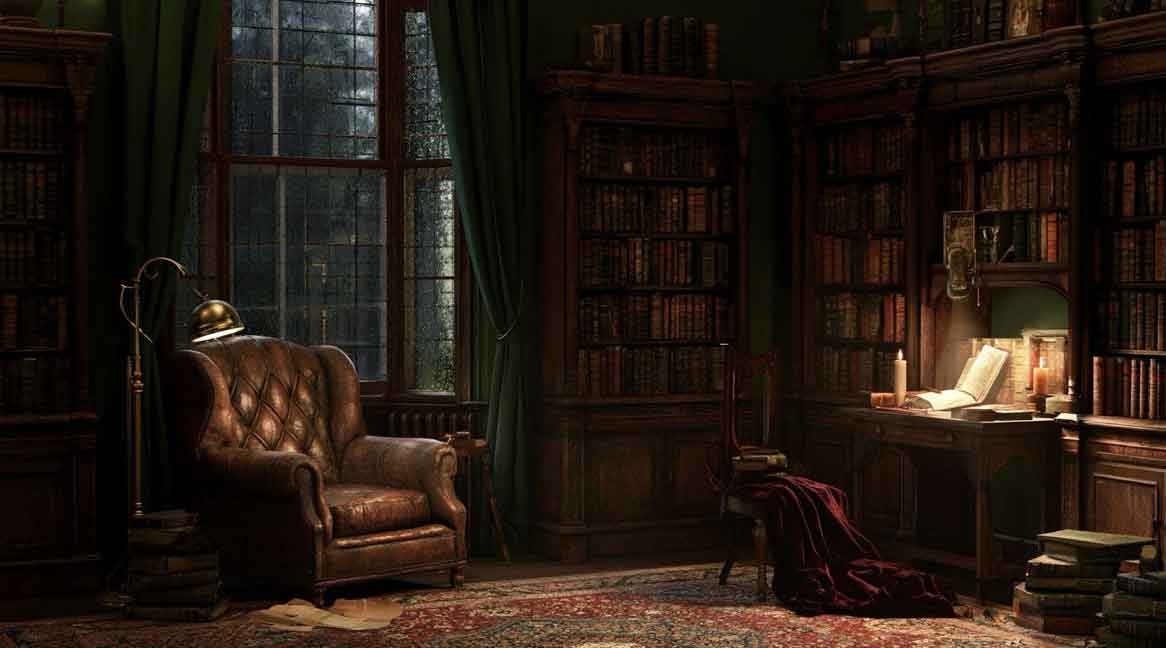
Imagine returning home on an October evening when the rain has been falling since four o’clock. The pavement glistens beneath the streetlamps, the last golden leaves cling to the trees, and somewhere beyond your window, the world seems to have slipped into a nineteenth-century novel. You’ve spent the day answering messages and keeping appointments. Tonight, you’d rather be doing something wonderfully unproductive.
Perhaps you’d like to be the mysterious young woman reading forgotten manuscripts in an Oxford library. Or the thoughtful heroine writing a letter beside a rain-streaked window. I love these imaginary worlds, not because real life should resemble a period drama, but because they remind me how lovely an ordinary evening can become when we give it our attention.
The setting has its pleasures, naturally. Deep wood, worn leather, old books and aged brass evoke the scholarly atmosphere of a much-loved university library. Yet even beautiful surroundings mean little if we’re too distracted to enjoy them.
So tonight, let’s borrow something better from Dark Academia: an affection for solitude, curiosity and small rituals. No elaborate preparations. Just a few hours in which your phone isn’t the most interesting thing in the room.
🕯 The Hour Between Daylight and Darkness
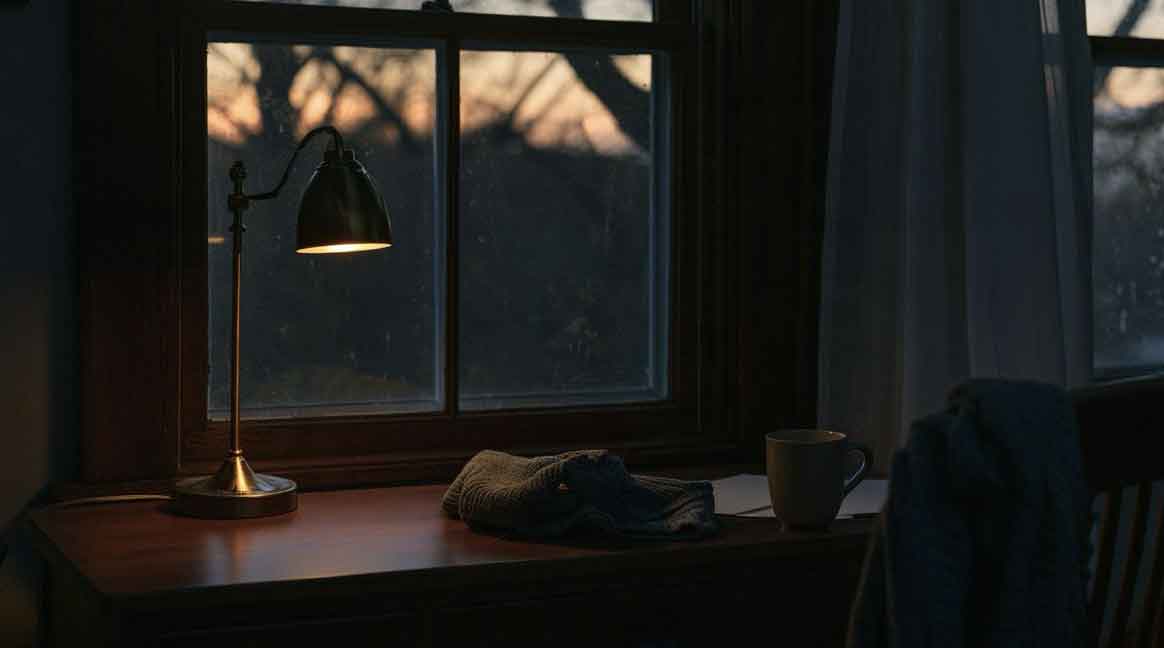
There’s a peculiar hour in autumn when afternoon disappears without warning. One moment, pale sunlight remains at the window. The next, the neighboring houses have begun to glow from within.
I think this is the loveliest time to begin.
Change out of whatever you wore during the day. Perhaps into a soft cardigan, comfortable trousers or a long nightdress you secretly associate with a heroine in an old novel. Then give yourself ten minutes to put away the cup on your desk, close your laptop and retrieve the book you abandoned yesterday.
Nothing dramatic. The evening shouldn’t begin with an exhausting cleaning session.
Now switch off the bright overhead light and turn on a warm lamp. The outlines of ordinary objects soften. The day suddenly feels finished.
There’s a practical reason to mind the lighting. Light helps set the body’s roughly 24-hour circadian rhythm, and bright light late in the evening can suppress melatonin, a hormone involved in sleep. The Sleep Foundation’s guide to light and sleep explains why dimmer evening light can be useful.
Keep enough light to read comfortably, though. There’s no romance in squinting at Jane Austen. If you light a candle, put it on a clear, stable surface and extinguish it before you feel sleepy.
The idea is to make the evening feel yours, not to audition for the role of a Victorian ghost.
📖 Read Something That Makes the Rain Feel Different
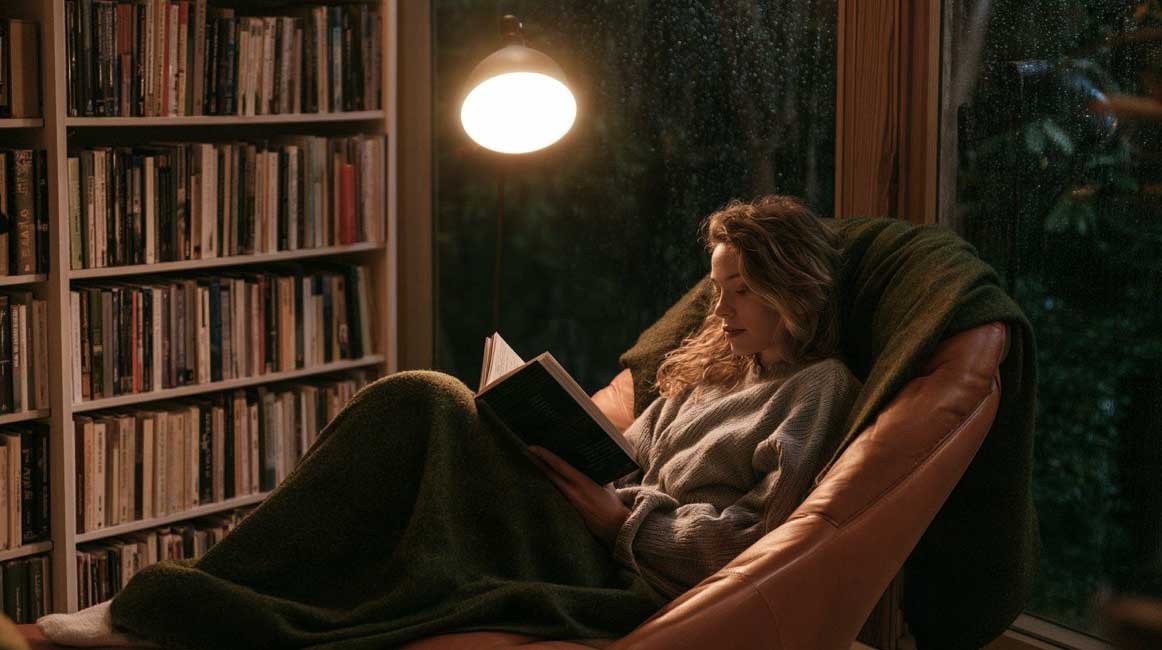
I have a weakness for books that seem to belong to particular weather. A seaside story in July. A strange mystery in October. Poetry when the sky has been grey for three days.
Choose according to the feeling you want, rather than the appearance of the cover.
For mystery, I’d pick Rebecca by Daphne du Maurier. Manderley, its imposing country estate, almost becomes a character itself. The novel is especially good when rain is tapping at the glass and you’re in the mood to suspect everyone.
For something thoughtful, try A Room with a View by E. M. Forster. Its questions about independence and expectations linger after you’ve closed the book. You may find yourself thinking about your own decisions while washing up the next morning.
If you’ve only got fifteen minutes, read Emily Dickinson. One short poem is plenty. Read it twice and notice which strange little word refuses to leave you alone.
The Mood Guide’s Dark Academia fall reading-nook ideas offer imaginative settings for these literary moods. But please don’t turn tonight into an attempt to conquer an impressive reading list.
One book is enough.
Keep a scrap of paper between the pages for a sentence worth remembering. You might write why it caught your attention, or just mark the page. Sometimes I disagree with a character so strongly that I have to shut the book for a minute. That’s part of the pleasure.
Six absorbed pages can make a better evening than fifty pages read merely to say you’ve finished them.
✒ A Little Midnight Correspondence

By nine o’clock, perhaps you’ve put the novel down. The house has gone quiet, and a thought occurs to you that doesn’t quite belong in a text message.
Write a letter.
It doesn’t need to be sent. Address it to someone you haven’t seen in years, or to yourself next autumn. Tell them about something small: the smell of the pavement after rain, a conversation you keep replaying, the peculiar way a song brought back your schooldays.
An ordinary notebook works perfectly. So does the back of an envelope.
When the page feels intimidating, begin with this:
Dear future me, tonight the weather made me remember…
Then follow the memory. If nothing comes, describe three things you noticed today. The red leaves in a gutter, your neighbor’s dog, the sentence you underlined.
There’s interesting research on more structured forms of expressive writing. A 2023 review of 31 experimental studies found a small average reduction in symptoms of depression, anxiety and stress over follow-up periods. That finding doesn’t mean a casual letter has the same effect, and writing isn’t a substitute for care when you need it.
For this evening, the reason can be simpler. A paragraph gives a passing thought somewhere to live.
Years from now, an account of a thoroughly ordinary Tuesday may be far more precious than an entry carefully designed to sound profound.
🎻 The Soundtrack of a Quiet Scholar
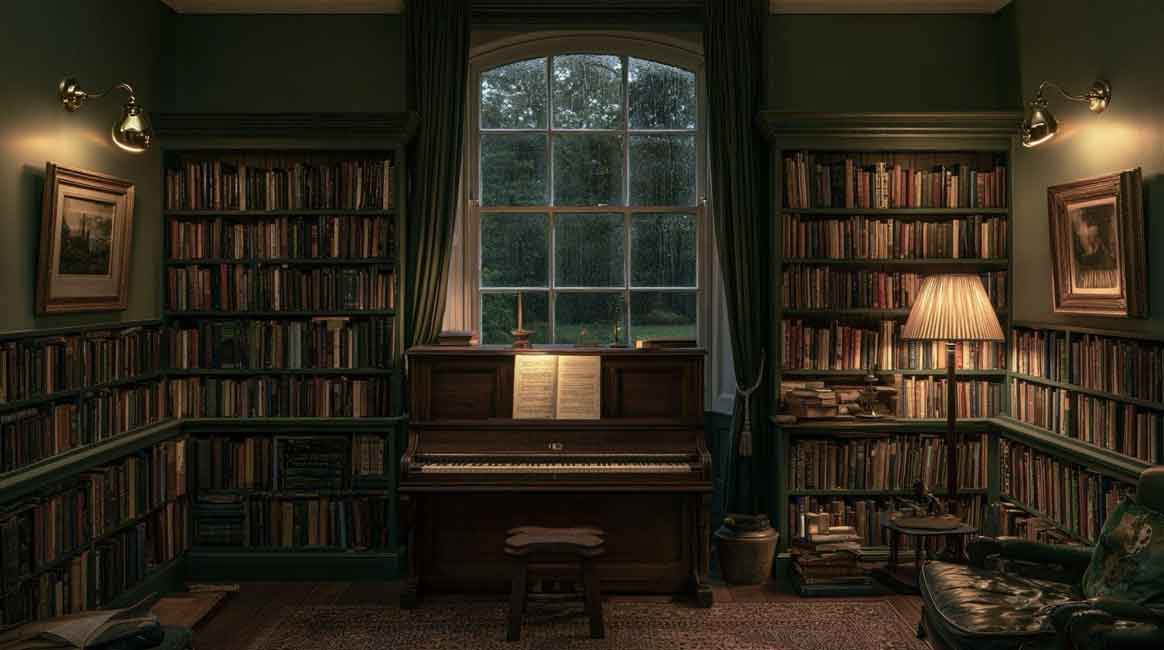
You set your pen down and stretch your fingers. Maybe you want music. Maybe you’ve discovered that the silence is nicer than you expected.
For the first possibility, choose a few pieces before you sit down, rather than spending half the night scrolling through playlists.
Chopin’s Nocturne in E-flat Major, Op. 9 No. 2 suits a first cup of tea. Debussy’s Clair de lune feels made for watching dusk settle. Erik Satie’s Gymnopédie No. 1 offers a quieter, more spacious mood. You could begin with Bach’s Cello Suite No. 1 in G Major, Prelude if you’d prefer something brighter.
Don’t keep music playing out of obligation. Even a beautiful piano piece can be distracting when a novel demands your concentration. Try the music while writing, then switch it off for the next chapter.
For a moment, listen to the actual evening: the pipes settling, a car turning the corner, the soft sound of a page.
When the last note fades, you realize your tea has gone cold. An excellent excuse to visit the kitchen.
☕ When the Evening Needs Something Warm
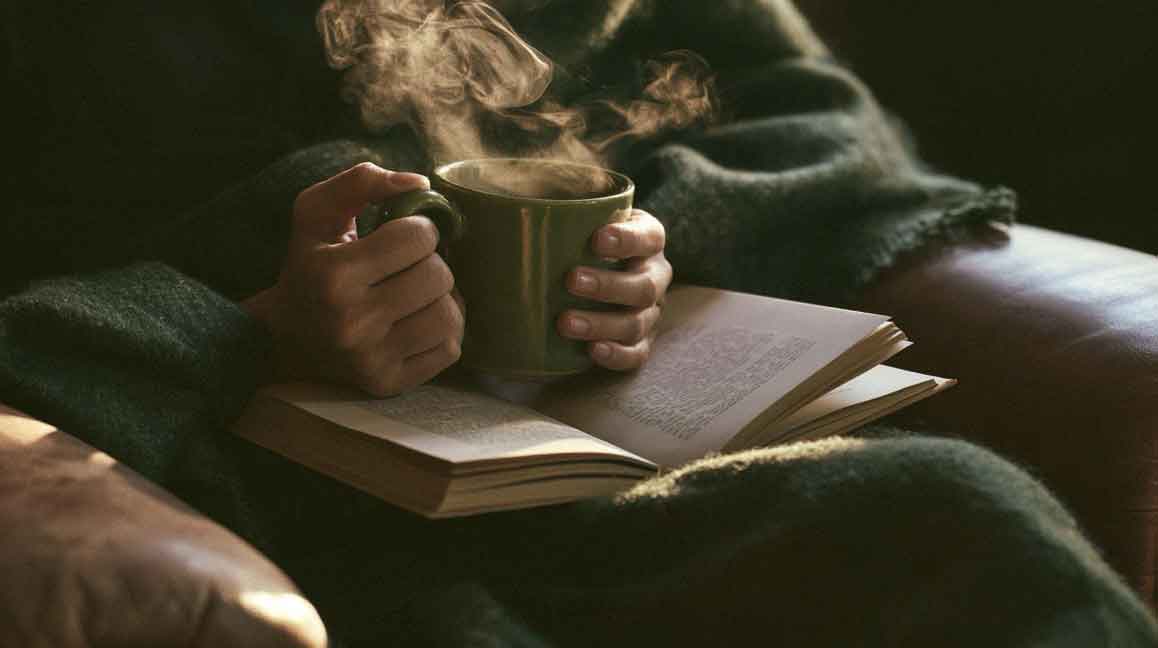
There’s no need to bake an elaborate cake just because the evening looks as though it deserves one.
I love black tea with a little cinnamon and orange peel. Warm a cup with hot water, empty it, then brew the tea with a cinnamon stick and a thin strip of peel. Follow the tea’s steeping instructions so it doesn’t turn bitter. Add honey if you feel like it.
If caffeine keeps you awake, choose a caffeine-free infusion. A soothing ritual that leaves you staring at the ceiling isn’t especially soothing.
Buttered toast with honey makes a lovely companion. So do apple slices dusted with cinnamon, eaten at the kitchen counter because you couldn’t be bothered to fetch a plate.
Bring the cup back to your chair. For three minutes, try doing absolutely nothing else. Feel the warmth through the ceramic and notice the scent of orange before taking another sip.
It’s surprisingly difficult not to reach for a screen during a pause like this. You might even catch yourself doing it automatically.
Put the phone down again. No scolding required.
Some evenings will feature a teapot and a tidy tray. Others will involve biscuits straight from the packet and your oldest pajamas. Both are entirely acceptable versions of a good night.
🛁 A Candlelit Bath Before Bed
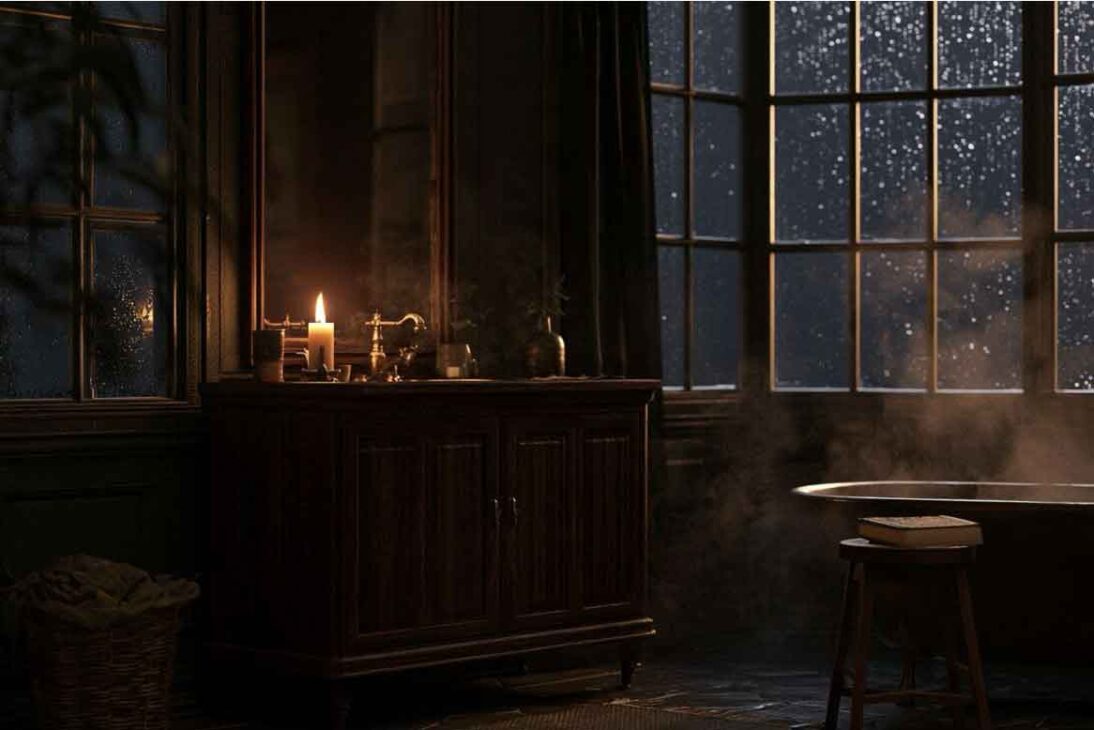
When the tea is finished and the letter is folded away, the bathroom can become the last room in the scholar’s house.
Run the water warm rather than scalding. Light a single candle, set it on a steady surface well away from the towels, then switch off the overhead light. A dark wood bathroom vanity with a little aged brass at the taps does a surprising amount of work here, catching the flame and making a small room feel like a private study.
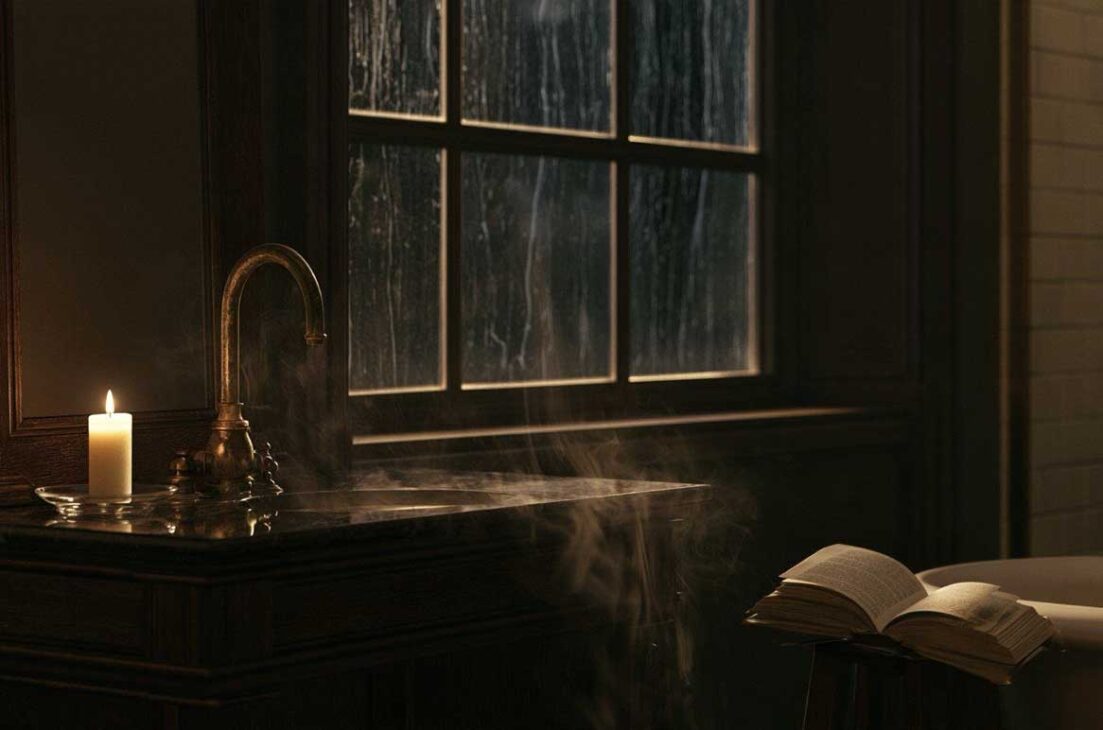
Bring your book, but keep it on a dry stool rather than within splashing distance. Read a page or two. Then simply listen to the steam, the occasional drip and the rain on the window.
You needn’t renovate anything. A folded towel, a brass dish for your rings and one candle will do.
Stay until the water cools, blow out the flame before you leave the room, and let the house be quiet. Bed will arrive soon enough, and you’ll probably be ready for it.
🗝 The Rituals Worth Keeping, Even Without the Aesthetic
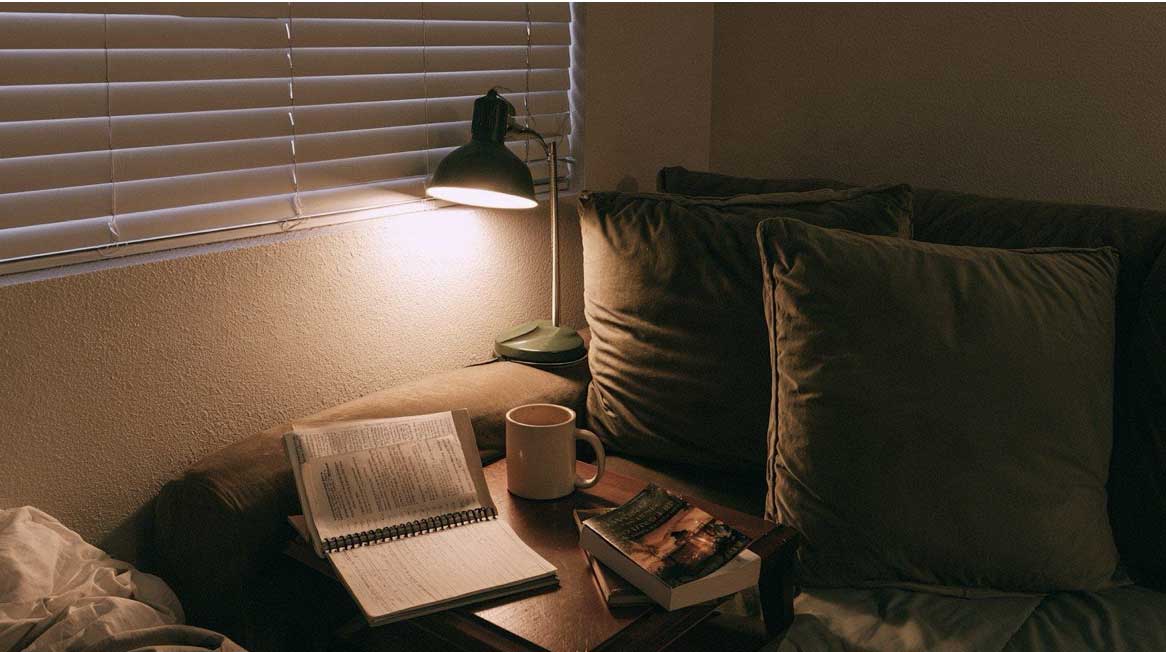
Here’s the part that makes me a little uncomfortable about aesthetic living.
We fall in love with a particular atmosphere because it promises to make life richer. Then we begin measuring our evenings against the photographs that inspired us. The books aren’t old enough. The handwriting isn’t elegant. The washing still needs folding, and nothing looks like an ancient university.
Suddenly, a peaceful pastime has become another assignment.
The Mood Guide’s Dark Academia aesthetic hub explores the aesthetic’s affection for scholarship and romantic imagination. But intellectual curiosity doesn’t require a stately library. It can happen on a sofa beside a laundry basket.
When you’re deciding what to keep from tonight, ask three questions. Does this help me slow down? Does it make me curious? Could I manage it on an ordinary Tuesday?
That last one matters most. If your ritual requires perfect weather, an immaculate setting and three free hours, you’ll probably spend more time planning than doing it.
On a busy night, try a twenty-minute version. Spend five minutes changing clothes and settling in. Read for ten. Use the final five to jot down one sentence you loved or one thought you want to revisit. Then stop.
No reading quota. No perfectly composed photograph.
You can borrow the Gothic novels but skip the classical music, or write letters while listening to cheerful pop songs. The Mood Guide’s look at academia aesthetics beyond light and dark is a reminder that there isn’t only one scholarly mood.
And please don’t make staying awake until midnight a test of devotion. If you’re exhausted, a paragraph and an early bedtime may be the more sensible ritual.
An imaginary Oxford scholar can investigate manuscripts until dawn. You have tomorrow to think about.
🌙 The Book Left Open
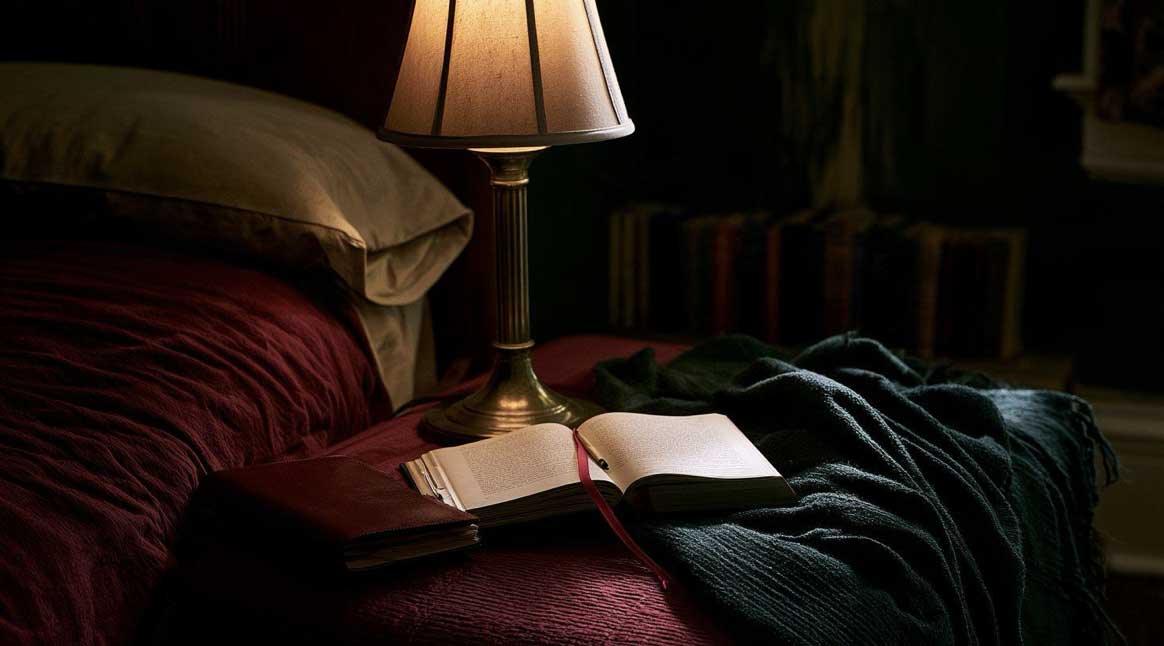
Eventually, the rain softens. Your cup is empty, the notebook stays open at a page you may laugh at next year, and the heroine in your novel is about to make a decision you already suspect she’ll regret.
You could read another chapter. Or you could slide a bookmark between the pages and leave her there.
I rather like leaving her there.
Tomorrow might be noisy and full of obligations. You may have only twelve minutes, no candle and a lukewarm drink. But you’ll know exactly where the story waits, and you won’t have to rebuild an entire atmosphere to return to it.
Perhaps that’s how an evening ritual becomes part of a life: not because every night is beautiful, but because something worth coming back to has been left unfinished.
– This article is part of a paid collaboraition