
Lab Diamond Necklace Buying Guide: What to Check Before You Pay
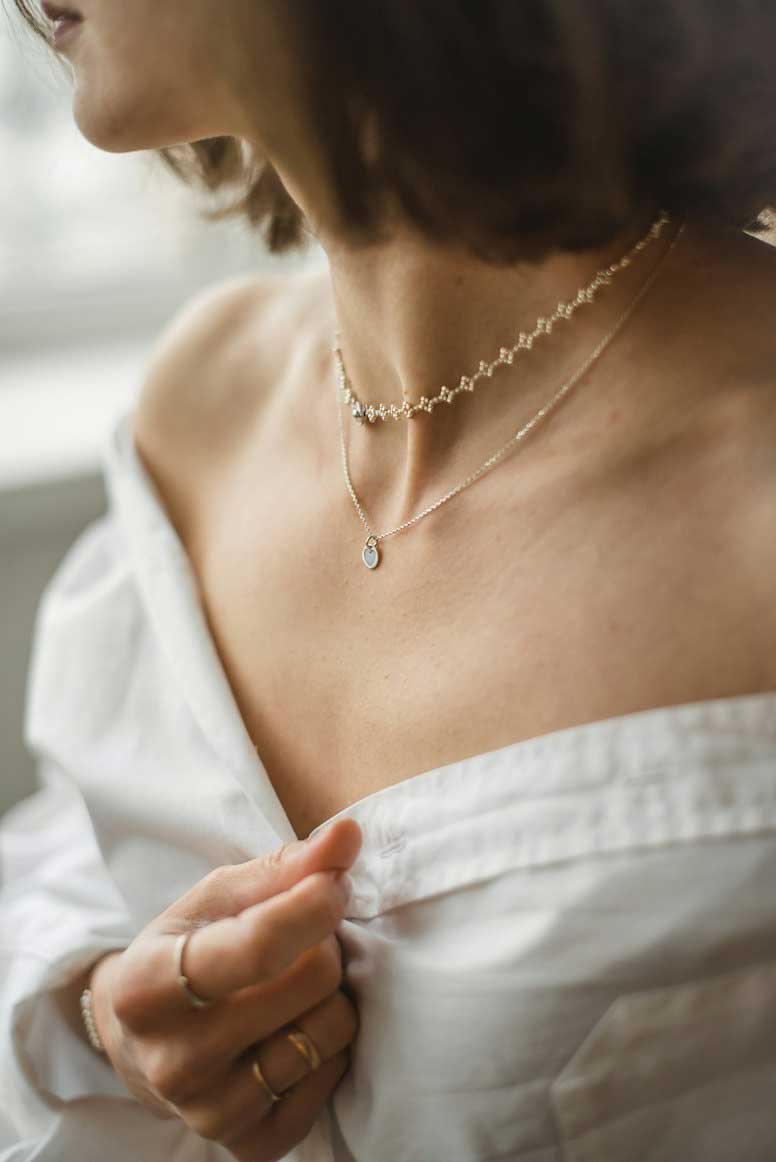
Seven things decide whether a lab diamond necklace is worth its price: the cut of the stones, how the carat weight is counted, the grading report, the metal, the setting, the clasp and the seller’s return policy. A pendant and a tennis necklace are judged differently on almost every one of them. Check each point against the listing before you pay, because most are hard to fix afterwards.
Stone Quality: What Matters at Necklace Distance
A necklace is seen from farther away than a ring, and nobody inspects it under a loupe. That changes where the money should go.
Cut comes first. Cut controls how much light the stone returns, and sparkle is what people notice across a room. Choose excellent or ideal cut and economise elsewhere.
Colour can drop a grade or two. Anything from D to I reads as white once the stone is set and worn. In yellow or rose gold, G to I looks identical to D. In white gold or platinum, stay at H or better for a large centre stone.
Clarity only needs to be eye-clean. VS2 or SI1 is enough for a pendant. For the small stones in a tennis necklace, even SI clarity is invisible to the eye.
Matching matters more than grades in a line necklace. In a tennis or riviera design, dozens of stones sit side by side. One stone that is slightly darker or duller than its neighbours stands out. Look at the necklace laid flat in a video or in person and check that the line reads as one even ribbon of light.
Carat Weight: Total Weight Is Not Stone Size
Listings quote carat weight in two ways, and confusing them is the most common buying mistake.
A pendant is usually described by its centre stone: a 1-carat solitaire has one stone weighing one carat. A tennis necklace is described by total carat weight, written ctw or ct tw. A 5 ctw necklace may hold a hundred small stones of about 0.05 carat each.
Two necklaces with the same total weight can therefore look very different. Before comparing prices, find three numbers in the listing:
- Total carat weight of all stones
- Number of stones, or the weight of each
- Stone diameter in millimetres, which tells you how wide the line will look on the neck
A typical lab diamond tennis necklace carries between 5 and 15 carats in total. A graduated design puts the largest stones at the front and smaller ones toward the clasp, so it looks bolder from the front than a uniform line of the same weight.
The Grading Report: What It Covers and What It Does Not
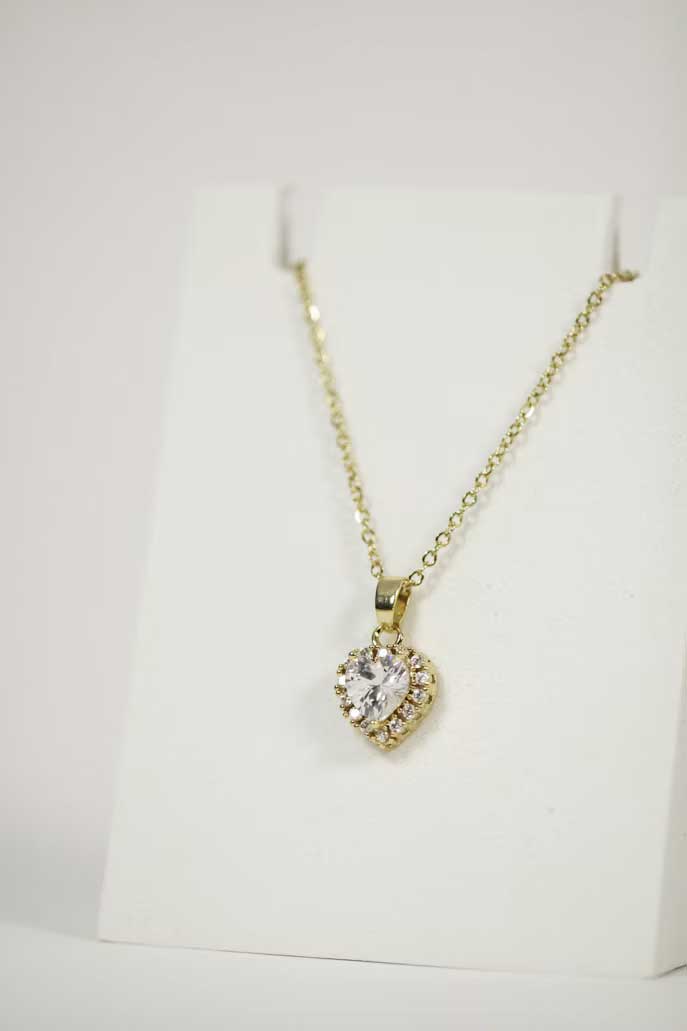
A report from an independent laboratory is the only proof that the stones match the description. What you should expect depends on the type of necklace.
- Pendant with a centre stone of half a carat or more. Ask for an individual report from IGI or GIA. The report number is laser-inscribed on the girdle of the stone, and a jeweller can show it to you under magnification. Match the two before you pay.
- Tennis and multi-stone necklaces. Small stones are not graded one by one. The piece may come with a jewellery report that covers the finished item instead. IGI grades mounted stones “as mounting permits”, so colour and clarity appear as ranges, such as D–E or SI1–SI2, along with the metal purity. A range is normal here and not a warning sign.
- Read the grading language. IGI reports for lab-grown stones use the familiar colour and clarity scale. GIA has replaced that scale for lab-grown diamonds with two quality categories, premium and standard. Both formats are valid, but they cannot be compared line by line.
Every report must state that the stones are laboratory grown. If the listing or the paperwork avoids the term, do not buy.
Metal and Setting
The metal holds the stones for decades, and in line necklaces it makes up roughly a fifth of the finished price.
| Metal | Composition | Best for | Watch for |
| 14k gold | 58.3% gold | Daily wear, best value | Lowest gold content of the fine jewellery standards |
| 18k gold | 75% gold | Richer colour, special pieces | Softer, scratches more easily |
| Platinum | Usually 95% platinum | Maximum durability, sensitive skin | Heavier and more expensive; develops a patina |
| Gold vermeil or plated silver | Thin gold layer over silver | Fashion pieces | Plating wears off; not suited to daily wear |
White gold is coated with rhodium and needs replating every few years to stay bright. Look for a purity stamp near the clasp: 585 or 14K, 750 or 18K, 950 or PLAT.
The setting decides how secure the stones are:
- Four-prong settings hold each stone at four points and are the safest choice for a necklace worn often.
- Three-prong settings show more of the diamond and let in more light from the sides, with slightly less protection.
- Bezel settings wrap each stone in a rim of metal. They protect best and never snag on clothing, but they make the stones look a little smaller.
Run a fingertip along the line. Prongs should feel smooth and even, and no stone should rattle when you tap the necklace gently.
Chain, Length and Clasp
Length changes where the necklace sits and how it works with a neckline. It also changes the price of a tennis necklace, because every extra inch adds diamonds.
| Length | Where it sits | Works with |
| 14 in (35 cm) | Tight around the neck | Off-shoulder and strapless necklines |
| 16 in (40 cm) | At the base of the neck | Most necklines; the standard for tennis necklaces |
| 18 in (45 cm) | Just below the collarbone | Crew and V-necks; the standard for pendants |
| 20–24 in (50–60 cm) | Above or at the bust | Layering over knitwear and high necklines |
Necks differ, so measure with a piece of string before ordering. An adjustable chain with a second loop one or two inches in gives you two lengths in one pendant necklace.
For a pendant, check that the chain is solid gold of the same karat as the setting and at least 1 mm thick. Thinner chains break. A lobster clasp is more secure than a spring ring.
For a tennis necklace, the clasp is a safety feature. Look for a box clasp with a figure-eight safety catch or a double lock. Open and close it several times. It should click firmly and never open under a light pull.
Price Check: What a Lab Diamond Necklace Should Cost
Use these retail benchmarks, in US dollars and 14k gold, to judge whether a quote is fair.
| Style | Diamond weight | Typical price |
| Small solitaire pendant | Under 0.50 ct | From about $300 |
| Solitaire pendant | 1 ct centre stone | 700–1,500 for the stone, plus setting and chain |
| Tennis necklace | 5–7 ctw | 3,000–8,000 |
| Tennis necklace | 10 ctw | About $8,000 |
| Tennis necklace | 15–16 ctw | 11,000–15,000 |
For comparison, a natural diamond tennis necklace of modest weight in near-colourless, eye-clean quality runs $8,000 to $15,000, and large designs pass $100,000.
A price far below these ranges usually has an explanation. The stones may be lower in total weight than the photo suggests, the metal may be plated silver, or the “diamonds” may be moissanite or cubic zirconia. Read the specifications line by line. Fancy shapes such as emerald, oval or pear cost more per necklace than rounds of the same weight, because matching them is harder.
Seller Policies Worth Reading
The policies protect you after the box is opened. Confirm four of them in writing.
- Returns. Look for at least 30 days and a full refund, not store credit. Check whether custom lengths or engraved pieces are excluded.
- Warranty. A good warranty covers loose stones, broken prongs and clasp failure. Ask whether it requires periodic inspections to stay valid.
- Repairs and service. Tennis necklaces need occasional prong tightening and cleaning. Find out whether the seller does this and what it costs.
- Appraisal for insurance. Ask for a document stating the replacement value. Insurers need it to add the necklace to a home or jewellery policy.
For online orders, confirm that shipping is insured for the full value and requires a signature on delivery.
Checklist Before You Pay
- The listing and paperwork state “laboratory grown” or “lab created”
- Cut grade is excellent or ideal
- Total carat weight, stone count and stone size are all stated
- A grading report is included, and its number matches the inscription on a centre stone
- Metal purity is stamped near the clasp
- Stones are evenly matched in colour and brightness
- Prongs are smooth and no stone moves
- The clasp has a safety catch and closes firmly
- The length has been measured on your own neck
- Return period, warranty and insured shipping are confirmed in writing
– Thia post is part of a paid collaboration


