
There’s a certain kind of house you slow down for without realizing it.
Nothing flashy. No bold colors shouting for attention. Just proportions that feel right, materials that age well, and a sense that everything is exactly where it should be. You might not even call it “luxury” out loud — but you feel it.
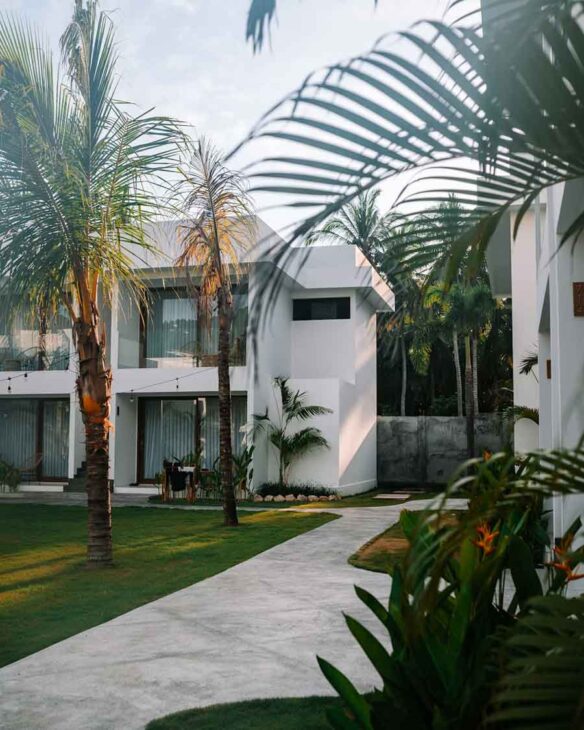
That’s what quiet luxury looks like on the outside.
It isn’t about impressing the neighbors or keeping up with trends. It’s about restraint. About choosing fewer things, but choosing them well. A facade that feels calm instead of busy. A yard that looks effortless, even though you know it isn’t. The kind of exterior that feels confident enough not to explain itself.
Spring is when this kind of refinement really comes to life. Not through major renovations or dramatic makeovers, but through subtle decisions — cleaner lines, healthier greens, materials that look better the longer they’re around. When the exterior stops trying so hard, and starts feeling intentional, that’s when a home quietly shifts into a higher category altogether.
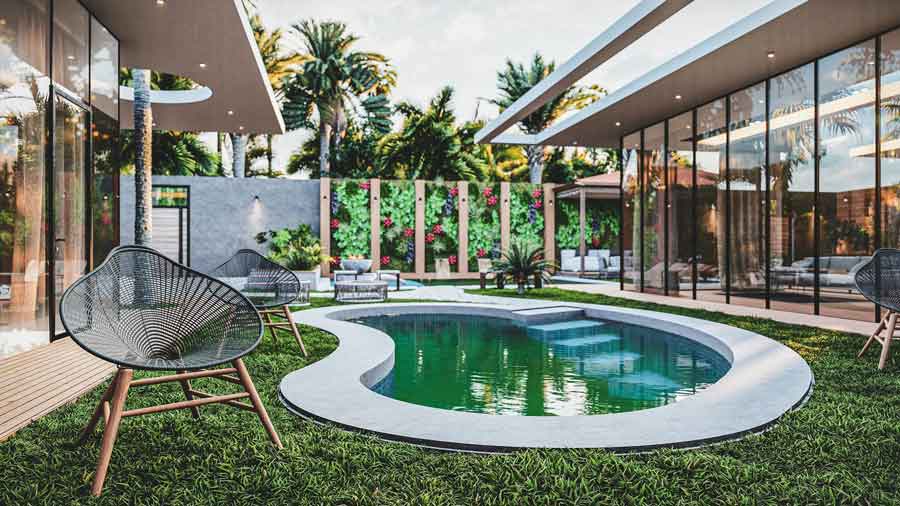
Landscape As Home Extension
Remember Piet Oudolf’s gardens? Same designer who created the High Line in New York and redid the grounds around Serpentine Gallery in London. His work is often cited not just in design circles but also by professionals who obsess over details — from plant structure to lawn care tools like Toro mower blades, because the overall effect is always the sum of small, well-maintained elements. His approach — naturalistic compositions that look striking year-round, even in winter. No perfectly trimmed bushes shaped like balls. Instead — ornamental grasses, perennials with architectural form, plants that dry beautifully.
This direction’s called the New Perennial Movement, and it fits perfectly with quiet luxury. This kind of garden doesn’t shout, but you can’t miss it. The foundation is structure. First you plant the “bones” of the composition: boxwood, yew, magnolias. Then you add accents — Annabelle hydrangeas with their massive white blooms, Japanese anemones, astilbes.
Important point: the lawn itself. Not the kind mixed with clover and dandelions, but genuine uniform coverage with cultivated grass varieties. Britain even has a lawn cult — some at Oxford colleges have been maintained for three hundred years. The secret isn’t magic, it’s regular care and proper equipment. A dull blade tears grass instead of cutting it — that causes browning at the tips and disease. Professional gardeners swap blades every season.
Minimalist Architecture That Actually Works
When John Pawson designed Calvin Klein’s house in the Hamptons back in the late 90s, he wasn’t just making a building — he was proposing a whole philosophy. Clean lines, no unnecessary decoration, materials that speak for themselves. Today that approach is finding new life.
A facade aiming for “quiet luxury” status avoids contrast just for the sake of it. Instead you get textures playing off each other: smooth rendered concrete next to rough stone, dark timber against light glass. Belgian architects like Vincent Van Duysen and Axel Vervoordt have spent decades proving that monochrome palettes don’t mean boring. Their projects live through shades — from warm ivory to cool graphite.
Even big developers have started moving this direction. Toll Brothers, known for their upscale communities across the US, launched their Architectural Series focusing specifically on restrained elegance. Instead of columns and molding — big glass planes, flat roofs, facades done in James Hardie fiber cement panels in neutral tones.
Materials That Age Well
True quality doesn’t show up immediately — it reveals itself over time. Natural stone, the same stuff Romans used for their aqueducts, is back now as travertine or limestone for facade cladding. These don’t need painting — their natural patina just adds character.
Wood’s having a renaissance too, but in a new format. Thermally modified timber, processed using Thermory or Lunawood technology, gets its dark tone without any chemicals — just high-temperature treatment. This material doesn’t rot, won’t warp, and you don’t need to repaint it every year. Scandinavian architects have been using it for over twenty years, but it’s only recently caught on elsewhere.
Metal stopped being exclusively industrial-looking. Corten steel, which rusts intentionally to create a protective terracotta-colored layer, became a favorite for fences and accent walls. Peter Zumthor used it for his Bruder Klaus chapel, and after that project the material turned into a symbol of thoughtful contemporary architecture.
Lighting As Dramatic Tool
When the sun goes down, the second act starts. Architectural lighting transforms a facade into a stage, but only if it’s designed right. Lutron, a global leader in lighting control systems, recommends the layering principle.
First layer — ambient light, general soft illumination that wraps the space. Second — accent light, highlighting specific elements: building corners, columns, interesting wall textures. Third — task light, functional lighting for paths and entrances. All three levels need to work together but adjust independently.
Light temperature matters more than you’d think. Warm white (2700-3000K) creates coziness and resembles candlelight. Neutral (3500-4000K) suits modern minimalist facades. Cool white (5000K+) looks harsh and gets used rarely, maybe for emphasizing glass surfaces.
Flos, an Italian company with nearly 60 years of history, released their Oblique outdoor fixture line that gives directed light without lighting up the sky — called dark sky friendly lighting. Europe already has regulations about light pollution, and these solutions are becoming necessity, not just trend.
Details That Decide Everything
If the facade is your home’s face, then details are its expression. Mailbox, house numbers, door handle — all of this either adds value or cancels out your efforts. German brand FSB, which has collaborated with designers like Philippe Starck and Jasper Morrison, makes hardware that lasts decades. Their handles are heavy, cold to touch, perfectly balanced. You feel it every time you open the door.
Gutter systems often get treated as purely functional, but Swiss company Rheinzink proved otherwise. Their titanium-zinc gutters develop noble patina and can become an architectural accent. Frank Gehry used a similar approach in the Fondation Louis Vuitton building in Paris — the downspouts are integrated into the overall concept so you notice them but they don’t irritate.
Fencing — another element that often gets underestimated. A massive corrugated metal fence immediately devalues any facade, even the priciest one. Instead, consider solutions like Gabion — mesh structures filled with stone. Or the Japanese approach — fences from untreated cedar that turn silvery-gray over time. Norway’s Kebony supplies modified timber that needs no treatment and handles any weather conditions.
The Color That Isn’t There
The paradox of quiet luxury is it avoids bright colors but doesn’t look pale. The secret’s in nuances. Take paint — seems like grey is just grey. But Farrow & Ball from Britain, brewing paints by traditional recipes since 1946, has 16 shades of grey in their range. Elephant’s Breath — grey with red undertone. Pavilion Gray — with blue. Cornforth White — almost white, but warm.
Little Greene, another British manufacturer, supports this same philosophy. Their French Gray has won dozens of architectural awards — it changes depending on lighting, looks different morning and evening, in sun and shade. This complexity of perception is the quality marker.
Wood elements shouldn’t be bright either. Oils and glazes from Germany’s Osmo or Denmark’s Junckers give subtle tone but let wood texture show through. It’s the opposite of cheap enamels that cover material with a thick opaque layer.
Practicality Without Compromise
Elegance shouldn’t conflict with functionality. Modern materials let you combine both aspects. Large-format porcelain stoneware (say, 120×60 cm) from Italy — brands like Marazzi or Imola — mimics natural stone but is significantly stronger and easier to maintain. It gets used for terrace and pathway cladding where natural stone would quickly lose its appearance.
Automation plays a role too. Smart home systems from Control4 or Crestron let you control lighting, irrigation, even driveway heating in winter — all without extra technician visits or manual intervention. The house adapts to weather, season, even whether the owners are home.
Quiet luxury isn’t about showing off what you can afford — it’s about creating an environment that’s comfortable to live in. Main thing to remember: real luxury always begins with attention to what others consider trivial.
– This post is part of a paid collaboration